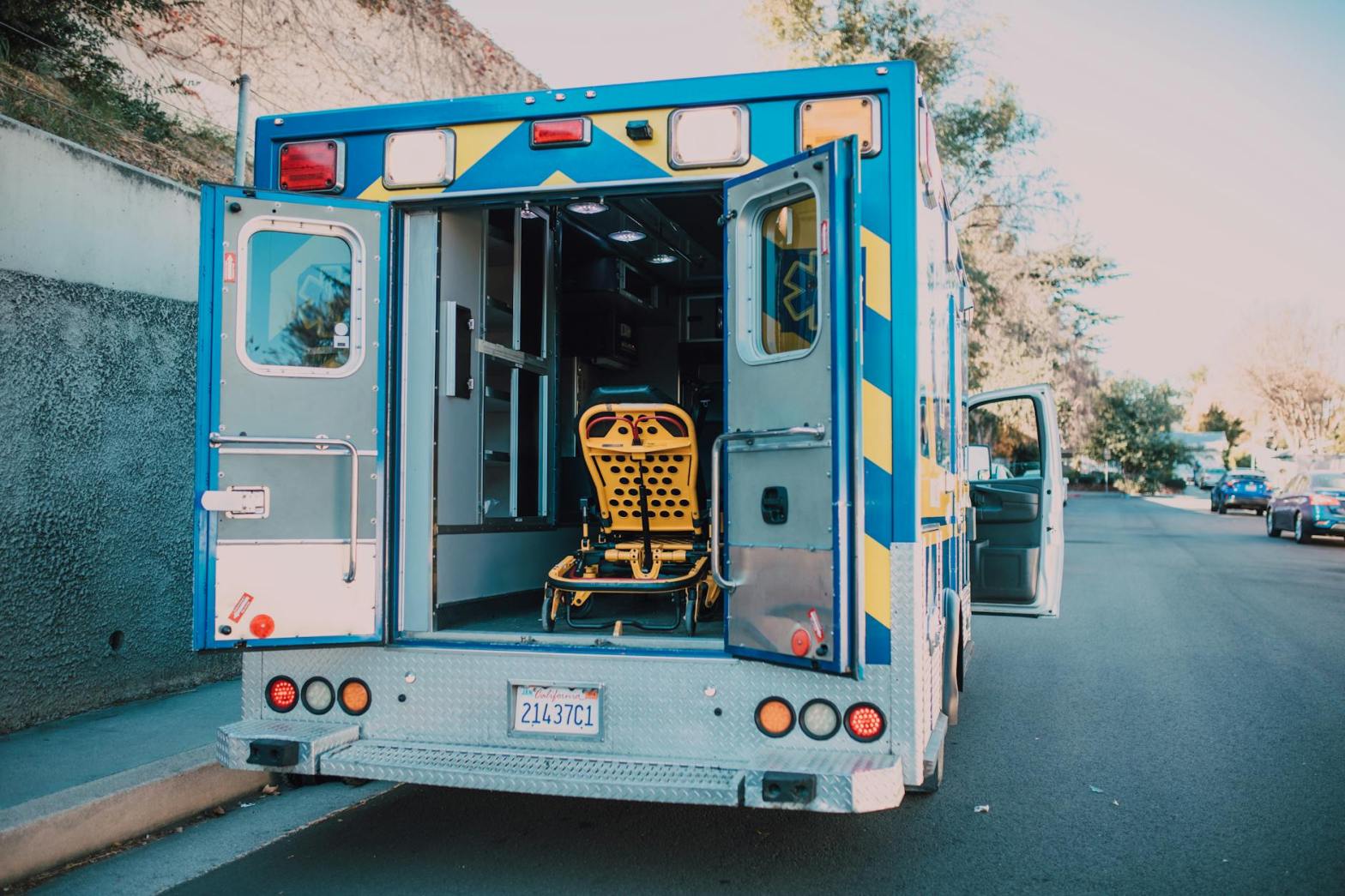
What if you called 911 for a medical or traumatic emergency only to find out there was no ambulance available to help you, or the closest ambulance was over an hour away?
What are we willing to do to prevent that from becoming reality?
For many emergency medical service (EMS) agencies, even in Colorado, these questions are no longer hypothetical.
According to a data report recently released by the Colorado Department of Public Health and Environment (CDPHE) Emergency Medical and Trauma Services (EMTS) division, Colorado ambulance agencies have nearly one million responses annually, and “more than half of EMS agencies respond to fewer than 2 calls per day.” Nearly 30% of responses result in no transport, and for most agencies, transports are the only billable service. Collection rates across EMS services are approximately 30-50% or less of what is billed due primarily to state and federal limitations on reimbursement. With low call volumes and lacking reimbursement, many rural agencies are struggling to survive and are heavily supplemented by volunteer labor and local fundraising.
A question haunting EMS services across the nation is this: can volunteers and bake sales keep up with the rapidly increasing costs of healthcare, vehicles, and education?
Especially with numbers like this…
- 13 – The number of states which designate EMS as an essential service comparable to law enforcement and firefighting according to a recent article published by EMS1 (Hassanein, 2023). Colorado is not one of them. While funding varies among those states which have a designation, without it, there is no requirement at all to provide adequate funding and support by any local, state, or federal government.
- $728 million – Estimated “annual cost of providing EMS in Colorado… equating to $124 per capita,” according to a report published by CDPHE from Phase 1 of the EMS System Sustainability Task Force. (ESS Phase 1 Report)
- $300,000 – A new ambulance purchase can cost upwards of this price. For many rural agencies, that vehicle is expected to have a lifespan of nearly 20 years.
- $40,000 – The cost of one life-saving cardiac monitor/defibrillator, not including maintenance and supplies.
- $8,000-$15,000 – Average cost of training for a single Paramedic from this area, which takes well over 1,500 hours to complete not including the continuing education which is required to maintain the certification. This level of training is often effectively unavailable in rural areas not only because of cost but also because of distance to training centers. Although education for Emergency Medical Technicians (EMTs) is usually less expensive, it still requires hundreds of hours to obtain and maintain certification.
- $3,936 – Estimated cost of an average ambulance transport by an agency the size of those in Baca County according to the same ESS Phase 1 Report.
- $1,519 – Average Ambulance bill. “While billing rates vary widely between individual services, the model estimates the average ambulance bill to be at least $1,519, and the average payment across all payers to be $594, or 39%.” (ESS Phase 1 Report)
- $18.95/hour – Average wage for certified EMS personnel (according to the Bureau of Labor Statistics). According to CDPHE, “50% of agencies rely on one or more volunteer provider(s).” While advanced-level providers at many paid agencies make slightly more than this national average, basic providers often make significantly less, or even nothing at all, as volunteers.
- $2 – The amount owners of registered motorized vehicles in Colorado pay per registration to support EMS. This funds state-level emergency medicine and supports grants for individual agencies across the State. However, these funds are insufficient to fully support EMS and, for many rural agencies, are difficult to obtain. Despite significant inflation, this $2 fee hasn’t been increased in almost 15 years.
So, what is the answer for Colorado and the many other states who share similar statistics?
Organizations such as the Emergency Medical Services Association of Colorado (EMSAC) and the National Association of Emergency Medical Technicians (NAEMT) are advocating at both the state and national level to get better reimbursement and better educational support for EMS. However, as it stands, it is up to individuals and communities to determine for themselves how important EMS is to them. What do we determine is an acceptable level of EMS availability and what are we willing to give to make it available?
Who should be paying for EMS? Is it only Colorado vehicle owners and the minimal reimbursement created by patient transports? Should tourism and travel somehow better support EMS, particularly in Colorado, a popular travel destination? What about the cost of readiness – the cost involved in making sure a vehicle and at least two trained people are ready and available 24 hours a day, seven days a week?
In 2022, CDPHE EMTS Division initiated a five-year Task Force specifically focused on EMS System Sustainability and a small group of determined individuals have taken on the formidable task of trying to evaluate what changes are needed to keep EMS systems alive in Colorado. In the meantime, the public remains largely unaware of the cost of EMS readiness and how dangerously close the whole system is to failing.
The challenge to each of us is that we sincerely consider what we can do to better support EMS locally.
Some simple ideas:
- Contact your local, state, and national officials outlining the need for better support (especially financial) for EMS.
- Support governing that promotes sustainable EMS.
- Consider making a donation or setting aside a portion of your sales to a local EMS service, especially during EMS Week (May 19-25, 2024).
- Be an active learner about EMS challenges and successes. Read the EMS System Sustainability Phase 1 report referenced in this article (link below).
- Write an encouraging note to a first responder in your community.
- Spread the word: Share this information with your circle of influence.
References:
Colorado Health Facilities & Emergency Services Division. (2024). EMS Day at the Capitol Two-Pager Graphic. EMS system sustainability task force. Colorado Department of Public Health & Environment. Retrieved April 2024, from https://drive.google.com/drive/folders/1C6PDK8bH_6zJ7tNKIDPFlY339r9PlYNg.
Emergency Medical Services System Sustainability Task Force Phase I Report. Department of Public Health & Environment. (2023, September). https://drive.google.com/file/d/1ZWOHCrducXzcRB3RIut5OAVocYb6EFWx/view
Hassanein, N. (2023, September 12). More states push to recognize Ems as “essential service.” EMS1. https://www.ems1.com/politics/articles/more-states-push-to-recognize-ems-as-essential-service-CIUIBa0k2kdZoHV7/
U.S. Bureau of Labor Statistics. (2023, September 6). EMTs and paramedics : Occupational outlook handbook. U.S. Bureau of Labor Statistics. https://www.bls.gov/ooh/healthcare/emts-and-paramedics.htm
Other Resources:
EMS System Sustainability Taskforce Home Page: https://cdphe.colorado.gov/emergency-care/engage-with-us/councils-boards-and-task-forces/ems-system-sustainability-task-force
State Legislator Lookup: https://leg.colorado.gov/FindMyLegislator
Federal Representative Lookup: https://www.house.gov/representatives/find-your-representative
EMS Week 2024 Honoring our Past. Forging our Future. May 19-25, 2024
Cherilyn Wittler, EMT-I
Board President
Springfield EMS Association
 Springfield EMS Association